
Plume diagnostics · Thrust measurement · Ground tests
星焓科技StarThermaTech
Electric Propulsion
For propulsion R&D, verification, and platform buildout, we deliver the full path from solution design and system deployment to calibration, commissioning, and analysis output.
Plume diagnosticsThrust measurementGround tests
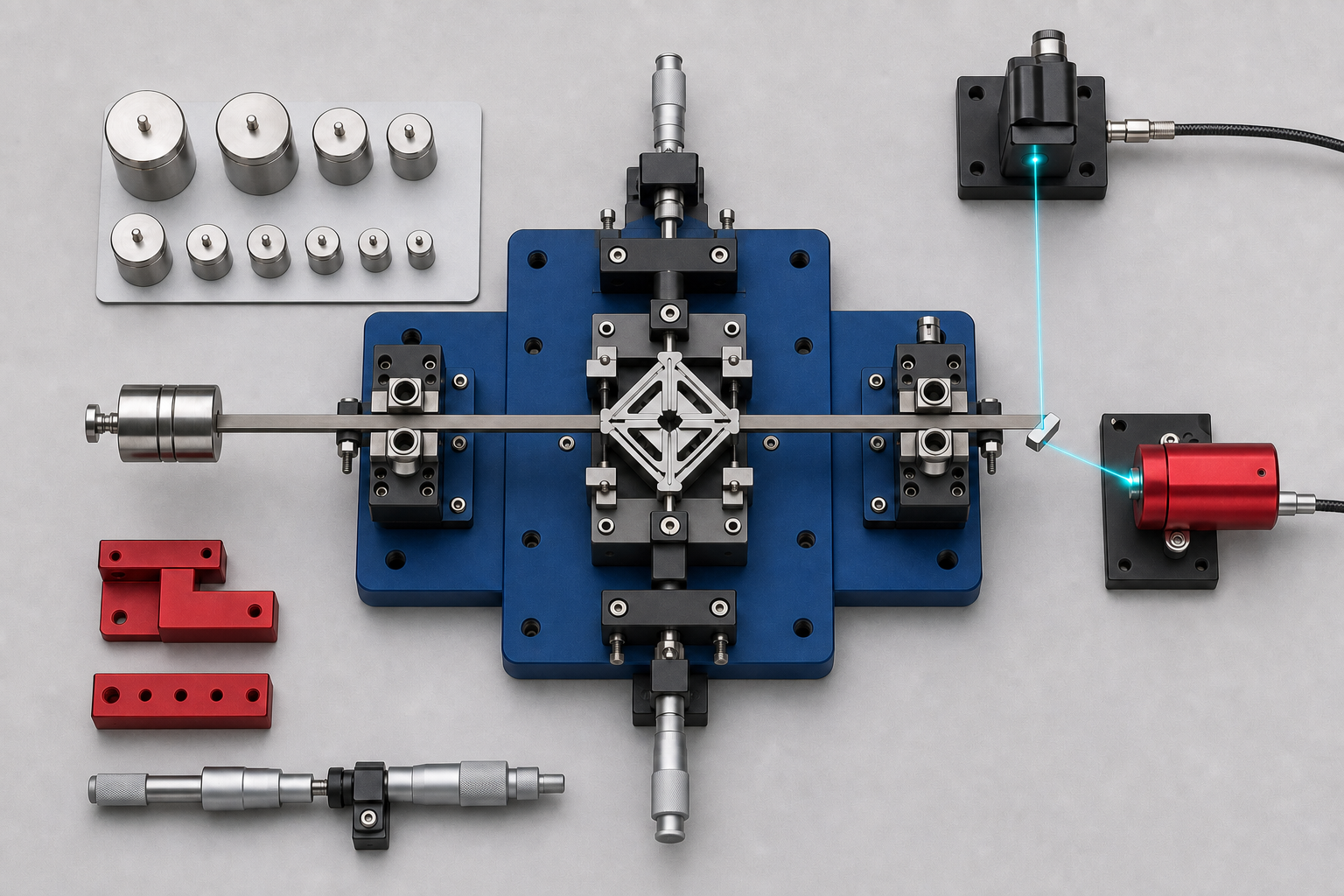
The diagnostic system connects the test object to target data
The system connects diagnostic instruments, engineering interfaces, motion control, timing control, data acquisition, calibration, analysis, and technical services.
Measurement Systems
- Micro-thrust measurement
- Contact diagnostics
- Optical diagnostics
- Motion and scanning mechanisms
Control and Acquisition
- Timing synchronization
- Automated acquisition
- Task orchestration
- Status monitoring
Engineering Integration
- Vacuum chamber adaptation
- Flange and tooling design
- Power, propellant, and cable interfaces
- Installation and safety interlocks
Data and Service
- Parameter inversion
- Report generation
- SOP consolidation
- Training and operations support
Calibration and system commissioning connect all system modules
- Thrust curves, calibration records, and performance conclusions
- Plume parameter maps, diagnostic reports, and key findings
- System architecture, SOPs, training packages, and expansion recommendations
Test Mission Types
01
Thruster Performance Validation
- Technical Focus
- Thrust, specific impulse, efficiency, and repeatability
- Applicable Scenarios
- Prototype validation, comparative testing, and parameter optimization
- Deliverables
- Thrust curves, calibration records, and performance conclusions
02
Plume and Interaction Diagnostics
- Technical Focus
- Angular distribution, energy spectrum, plasma potential, composition, and contamination risk
- Applicable Scenarios
- Mechanism studies, plume evaluation, and boundary-effect analysis
- Deliverables
- Plume parameter maps, diagnostic reports, and key findings
03
Ground-Test Platform Buildout
- Technical Focus
- Vacuum chamber fit-up, unified interfaces, automated procedures, and long-duration operation
- Applicable Scenarios
- New laboratory setup, platform upgrades, and long-term joint test programs
- Deliverables
- System architecture, SOPs, training packages, and expansion recommendations
Test Workflow and Output
The technical team confirms the target, designs the system, connects the interfaces, calibrates the instruments, completes the data analysis, and supplies the deliverables.
- 01
Requirements Definition
Clarify thruster type, operating conditions, propellant, vacuum environment, and target parameters.
Mission boundary and requirement checklist - 02
System Solution Design
Define the measurement chain, motion mechanism, acquisition logic, and interface adaptation.
System architecture and implementation plan - 03
Deployment and Integration
Complete installation, flange and tooling adaptation, synchronization, and interlock checks.
Integration records and acceptance items - 04
Calibration and Test Execution
Execute thrust calibration, confirm measurement paths, and run steady, transient, or long-duration tests.
Test records and raw data packages
Data and System Delivery
The delivery includes system configuration, interface data, calibration records, raw data, analysis reports, operation instructions, and technical services.
Solution dossier and configuration list
Implementation boundaries, configuration logic, and key interfaces.
System architecture and interface notes
Architecture diagrams for subsystems, timing, and chamber interfaces.
Calibration records and uncertainty notes
Calibration routes, baseline data, and uncertainty explanations.
Raw data package and naming rules
Structured datasets, naming conventions, and file organization.
Parameter report and conclusion summary
Core parameter results, trend interpretation, and final conclusions.
SOP training materials and O&M guidance
Procedures for operation, training, maintenance, and future extension.
TECHNICAL SERVICES
Implementation Support
System commissioningOperating documents and trainingRemote support or support at the test site
PRODUCT SET
Diagnostic Products in the System
XHINS-TTS Torsional Thrust StandXHINS-ETS Electromagnetic Thrust StandXHINS-LP Langmuir Probe ProductsXHINS-FP Faraday Probe / Faraday CupIon Energy Analyzer (RPA: Retarding Potential Analyzer / RFEA: Retarding Field Energy Analyzer)XHINS-EBP ExB Probe / Wien Filter / Particle Velocity SelectorOptical Emission Spectroscopy (OES)Laser-Induced Fluorescence (LIF)Thomson Scattering
Diagnostic application cases
Diagnostic application cases
TECHNICAL DISCUSSION
Configure the Diagnostic System for Your Target Data
Send us the test object, target parameters, and site conditions. The technical team will give the system configuration, interfaces, calibration method, data format, and implementation plan.